
PGA Show Tech: What Actually Drives Revenue?
The 2026 PGA Show drew over 34,000 golf professionals to Orlando, the largest turnout since 2009. Nearly ten miles of aisles. Thousands of new products. Launch monitors, biometric trackers, AI swing analysis tools, fashion collaborations with streetwear labels. The 2026 PGA Show made one thing clear: golf technology is evolving faster than ever.
The Show reflected an industry in transition—from exclusivity to accessibility, from tradition to lifestyle integration. For golf facility operators, the question is: which of these shifts matter for your bottom line?
What Modern Operators Actually Want
Across conversations with driving range and simulator venue operators, a pattern emerges. They want tools that deliver three things:
Revenue optimization. Dynamic pricing that responds to demand. Membership models that increase lifetime value. Booking systems that fill capacity gaps.
Operational efficiency. Less time on manual tasks. Better data visibility. Systems that talk to each other instead of creating more work.
Player engagement. Experiences that bring people back. Digital touchpoints that feel seamless. Programming that appeals to younger, style-conscious audiences who view golf as lifestyle, not just sport.
As industry observers noted, golf is becoming "less insular and more culturally porous"—exactly what modern golf venues need. But cultural relevance only matters if it drives business results.
Strategic Partnerships That Actually Move the Needle
The most impactful innovations were partnerships that solve multiple problems simultaneously.
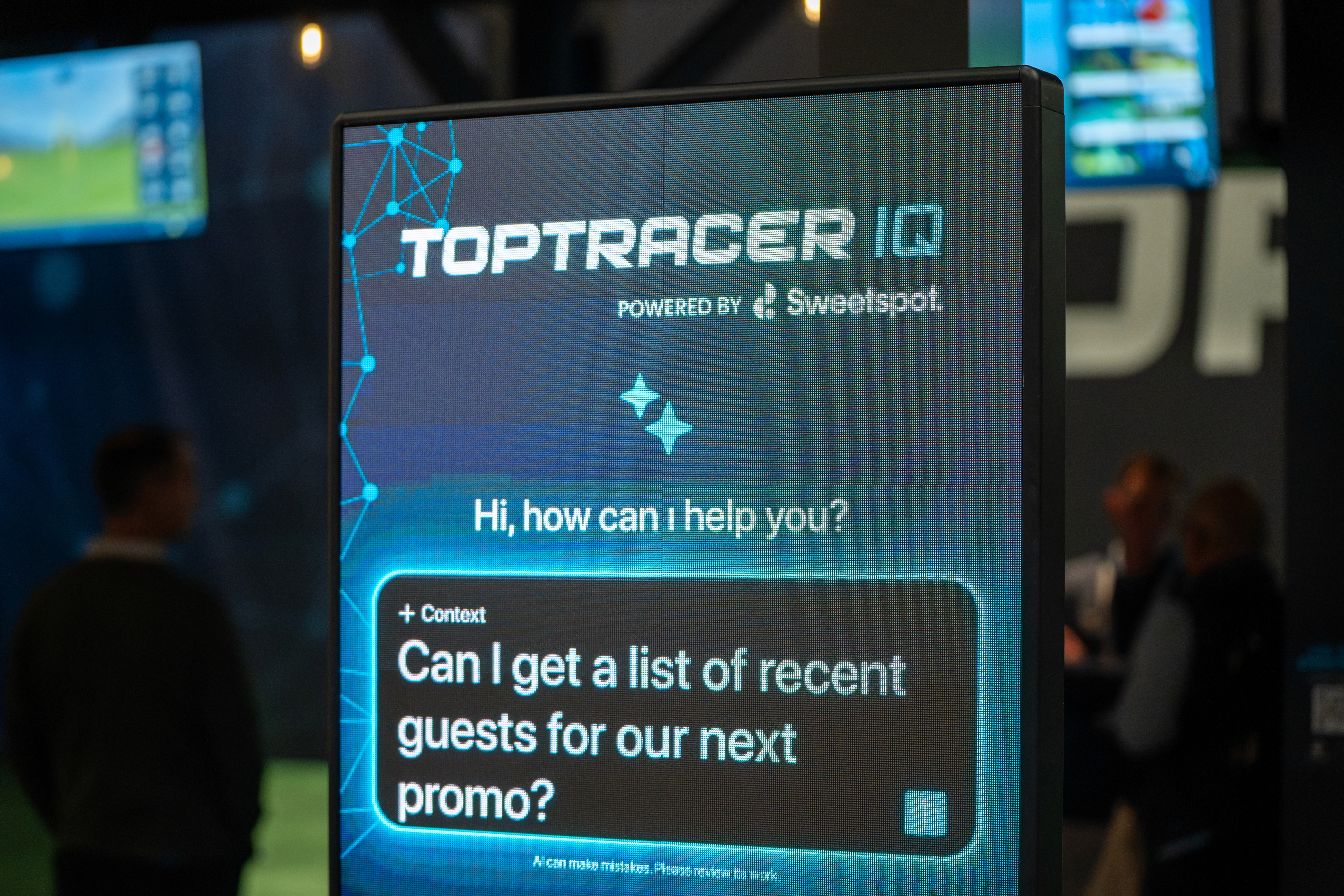
Two standout examples: Toptracer IQ powered by Sweetspot and Range Servant Pay powered by Sweetspot.
Toptracer IQ transforms driving ranges into data-rich training environments while integrating seamlessly with booking and payment systems. Instead of bolting on another point solution, facilities get enhanced player experiences that tie directly into their revenue management platform.
Range Servant Pay takes the same integrated approach to automated ball dispensing. Players get frictionless access to practice balls while operators gain real-time utilization data and streamlined payment processing—all within their existing tech stack.
These partnerships represent what the industry actually needs: innovations that enhance the player experience without creating operational complexity.
A Framework for Evaluating New Tech
Before investing in any PGA Show innovation, ask yourself these questions:
Does it solve a measurable problem?
AI swing analysis looks impressive. But if your facility's main challenge is empty bays during off-peak hours, a sophisticated training tool won't help. You need pricing strategies and booking automation that maximize capacity utilization.
Does it integrate with your existing systems?
The Show featured compact, app-integrated launch monitors and connected training platforms. Great—if they plug into your broader tech stack. If they require separate logins, manual data entry, or yet another dashboard to monitor, they're creating friction instead of removing it.
Can you measure its ROI in 6 months?
The Show highlighted how clubs are evolving into hybrid spaces that combine sport, social interaction, and wellness. This multi-use approach makes sense—but only if you can track which offerings actually drive incremental revenue.
Does it match how your players actually behave?
Younger golfers value authenticity, creativity, and self-expression as much as technical performance. But does your member base skew toward this demographic? Are you in an urban market where golf-as-lifestyle resonates, or a traditional club where core players prioritize course conditions?
What Deserves Your Attention
Based on trends from the 2026 Show and what drives real business impact:
Booking and engagement platforms: The shift toward year-round engagement and experiential retail models requires systems that let you communicate with players, personalize offers, and automate scheduling. This is foundational infrastructure, not nice-to-have tech.
Data-driven pricing tools: With extensive educational programming focused on retail optimization and club management, the industry recognizes that static pricing leaves money on the table. Dynamic pricing adjusts to demand patterns your gut feel might miss.
Flexible membership structures: Modern golfers aren't defined by a single demographic profile. Your revenue model shouldn't be either. Modern membership systems let you test different tiers, subscription models, and access packages without overhauling your entire operation.
Integrated payment solutions: Facilities that combine training, social spaces, and multi-sport offerings need seamless transactions across all touchpoints. Friction at checkout kills conversion—especially for younger, digitally-native players.
The Innovation That Matters Most
Many facilities still lack unified visibility into bookings, revenue, and player behavior. They're using spreadsheets for capacity planning and manual processes for membership management.
The facilities winning right now? They've invested in platforms that centralize operations and let them test new offerings without technical headaches. Once that foundation exists, innovations from the PGA Show become strategic additions instead of expensive experiments.
Build the Foundation Before you Chase the Future
If you don’t have clear visibility into bookings, pricing, revenue, and player behaviour, every new tech investment becomes a gamble. Sweetspot gives you the unified platform and real-time insight to evaluate opportunities with confidence – and turn the right ones into measurable growth.
Book a demo to see how modern golf facilities are building the operational foundation that makes innovation pay.